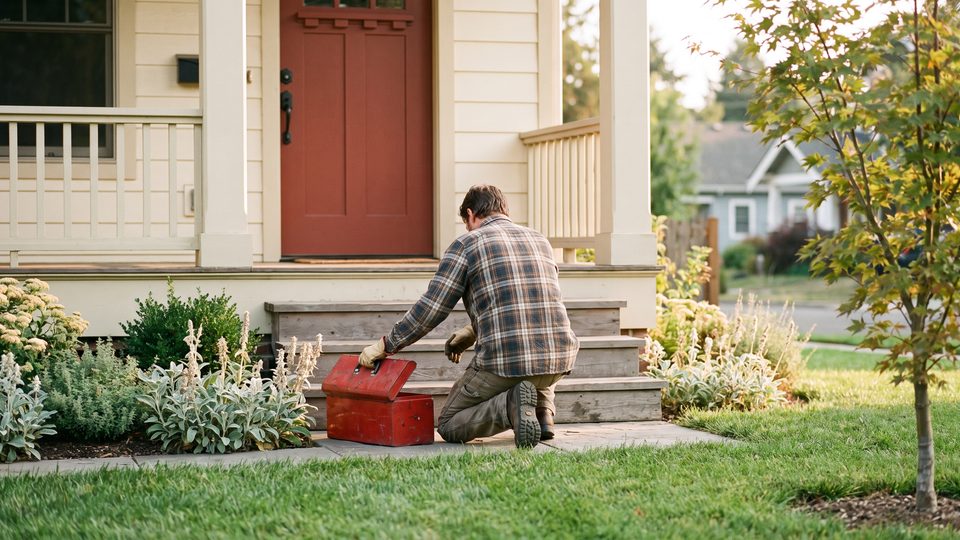
Repair, maintain and upgrade your home, with the sources
Fix My Home Right explains home repairs, maintenance and upgrades in plain English: leaks, doors, windows, shades, older-home renovation, lawns, trees and hiring help. Every step links to the official source, state rules are labeled by state, and we tell you when a job belongs to a licensed pro.
Each part links to guides that cite the EPA, ENERGY STAR, the U.S. Department of Energy, the CPSC, the U.S. Fire Administration, state contractor boards and the International Society of Arboriculture, with the date we checked them.
Safety and local rules
When is a job do-it-yourself, and when is it a pro’s?
Plenty of home jobs are safe to do yourself: replacing a toilet flapper, weatherstripping a door, timing your sprinklers. Electrical, gas, roof, structural and large tree work can hurt people, and contractor licensing and permit rules are set by each state, county and city. So we explain the checks, tell you when to call a licensed pro, and label every state-specific item with the state’s name.
California example: the Contractors State License Board says to get at least three written bids, and a home improvement down payment generally can’t exceed 10 percent of the contract price or $1,000, whichever is less.
A seasonal home maintenance checklist with the checks that catch small problems early: smoke alarms, water leaks, door and window drafts, gutters, lawn watering, trees and digging safely. Each item links to its own guide and the official source.
How to hire a contractor for a home repair or remodel: get several written bids for the same scope, check the license and insurance, read the written contract, know your right to cancel, and pay in stages, never all up front.
Why cordless blinds and shades are the safer choice in homes with young children, what the federal rules say about window covering cords, which rule a court threw out, and how to make old corded blinds safer while you shop.
How to tell whether it is time to replace your windows, what the ENERGY STAR and NFRC labels mean (U-factor and SHGC), how climate zones change the right choice, frame types, and what to ask the installer, especially in older homes.
How to find air leaks around an exterior door and weatherstrip it the way the U.S. Department of Energy’s weatherization crews do: adjust the door, measure, notch, seal with a thin bead of caulk, fasten, add a door sweep and test.
Before you sand, scrape, replace windows, pull up old flooring or tear out trim in a home built before 1978, learn how lead dust happens, when EPA requires a lead-safe certified contractor, and the lead-safe steps EPA lists for do-it-yourselfers.
Education only: general information, not professional advice for your home. Building codes, permits and contractor licensing vary by state, county and city, and electrical, gas, roof, structural and tree work can be dangerous, so check the official source we link or hire a licensed professional before you act. We may earn money from ads and, in the future, paid links; our advice isn’t for sale.
We use cookies for basic site features and Google Analytics. Google and its partners use cookies to show and measure ads. Privacy Policy